Stop Running Out of Hot Water
Tankless Water Heaters in Modesto for high-demand households experiencing back-to-back usage shortages or excessive energy costs
CAL Plumbing LLC installs on-demand tankless water heating systems for residential properties throughout Modesto, Oakdale, Turlock and surrounding areas. You face a different challenge than broken equipment when your traditional tank cannot keep pace with simultaneous showers, laundry, and dishwashing. Tankless systems heat water only when you open a tap, eliminating the standby energy loss of maintaining a full reservoir and providing continuous hot water as long as demand stays within the unit's flow rate capacity.
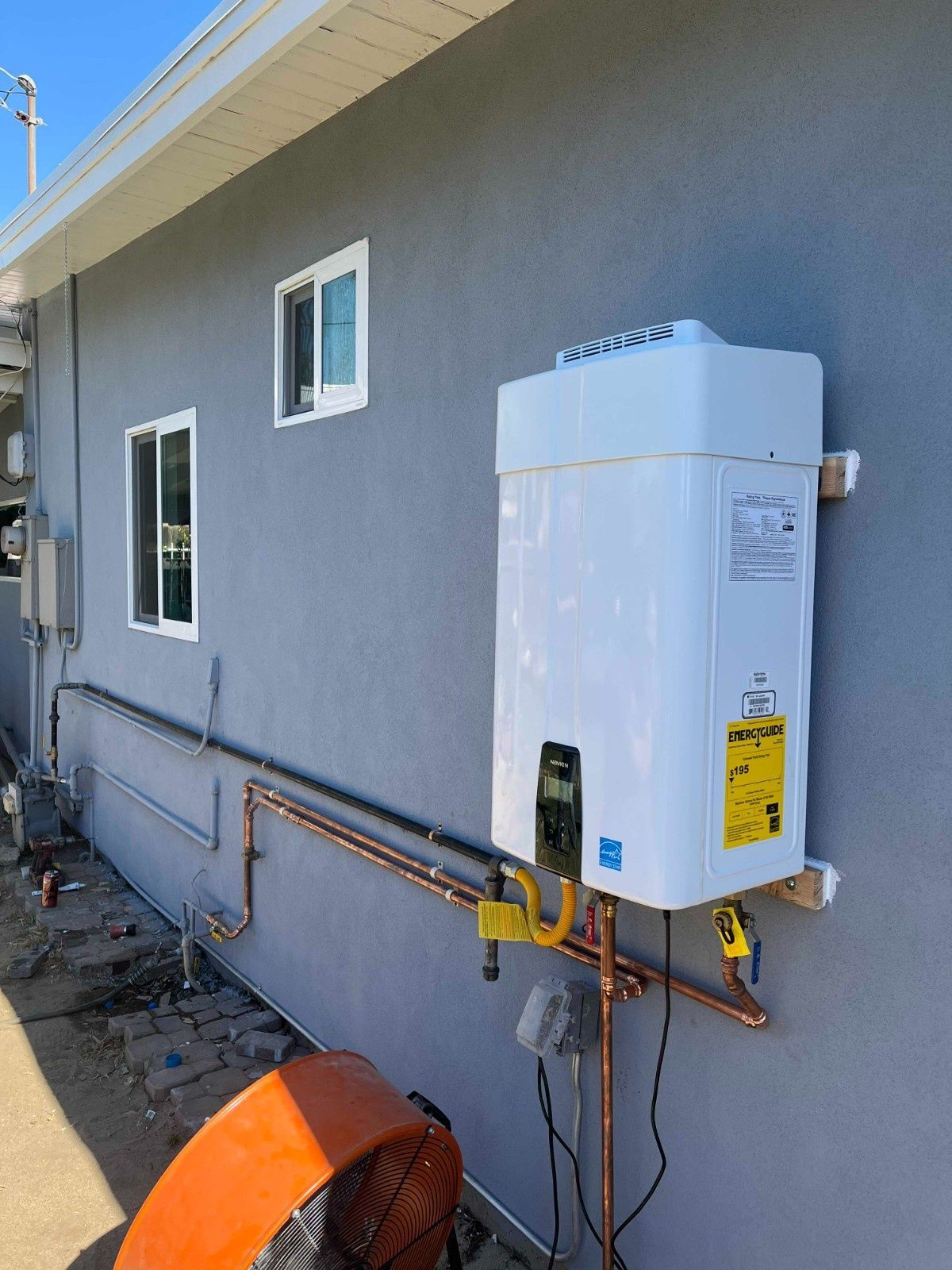
A tankless heater uses high-powered gas burners or electric coils that activate the moment water flows through the heat exchanger, bringing incoming cold water up to set temperature before it reaches your fixtures. Because there is no stored volume, the unit mounts on a wall and occupies a fraction of the floor space required by a 40 or 50-gallon tank. This compact design frees up utility closets, basements, or garage corners for other uses. Proper installation includes sizing the unit to match your peak gallons-per-minute demand, ensuring adequate gas line capacity or electrical service, installing appropriate venting for combustion models, and calibrating flow sensors and temperature controls.
If your household routinely exhausts your current water heater or you want to reduce monthly energy use, ask about upgrading to a tankless system designed for your specific usage profile.
Installation Details That Affect Long-Term Performance
When you switch to tankless, the installation must account for your home's existing infrastructure and peak simultaneous demand. CAL Plumbing LLC calculates the maximum flow rate by adding up fixture demands during busiest periods, such as two showers running at 2.5 gallons per minute each while a dishwasher draws another gallon per minute. The selected unit must deliver enough heated gallons per minute to cover that total without temperature drop.
After installation, you will notice that hot water arrives without the wait for a tank to refill and reheat, showers stay consistent even when someone starts the washing machine, and monthly energy bills reflect the elimination of standby heat loss. The unit responds immediately to tap activation, modulates burner output based on flow rate, and shuts off completely between uses. You should also see clearly labeled shutoff valves, accessible inlet filters for periodic cleaning, and proper clearances around the unit for airflow and service access.
Tankless heaters require annual maintenance to prevent scale buildup inside the heat exchanger, especially in areas with hard water. Flushing with descaling solution removes mineral deposits that restrict flow and reduce heating efficiency. Inlet screens also need periodic cleaning to maintain water pressure. These steps are not part of initial installation but directly affect system lifespan and performance. Gas models require adequate combustion air and venting to outdoors, while electric models may need dedicated circuit breakers and upgraded electrical panels depending on total amperage draw.
Homeowners considering tankless systems often have questions about capacity, compatibility, and ongoing requirements.
Common Questions About Tankless Water Heating
What happens if I open too many taps at once?
The unit will heat water to the maximum flow rate it was designed for, but temperature may drop slightly if total demand exceeds capacity. Proper sizing during installation prevents this scenario during normal use.
How much space does a tankless unit save compared to a tank heater?
A typical tankless unit measures roughly two feet tall by one foot wide and six inches deep, compared to a 50-gallon tank that stands five feet tall and occupies a 22-inch diameter footprint.
Why does a tankless heater need annual maintenance?
Mineral scale from hard water accumulates on the heat exchanger surfaces, insulating them from water flow and reducing efficiency. Flushing with descaling solution once a year removes deposits and restores full heating capacity.
Can a tankless system work with my existing gas line?
It depends on the unit's BTU rating and your current gas line diameter and pressure. In Modesto, some older homes require gas line upgrades to support the higher flow rates tankless burners demand during operation.
How quickly does a tankless heater pay for itself through energy savings?
Lower energy usage typically reduces monthly costs by 20 to 30 percent compared to tank heaters. Payback period depends on installation costs, local energy rates, and household usage patterns.
CAL Plumbing LLC offers consultations to evaluate whether your home is suited for tankless installation and which models match your peak demand and budget. Contact the team to discuss upgrade options and receive a detailed estimate tailored to your property.